
How Long Does Stamped Concrete Last in Georgia's Climate?
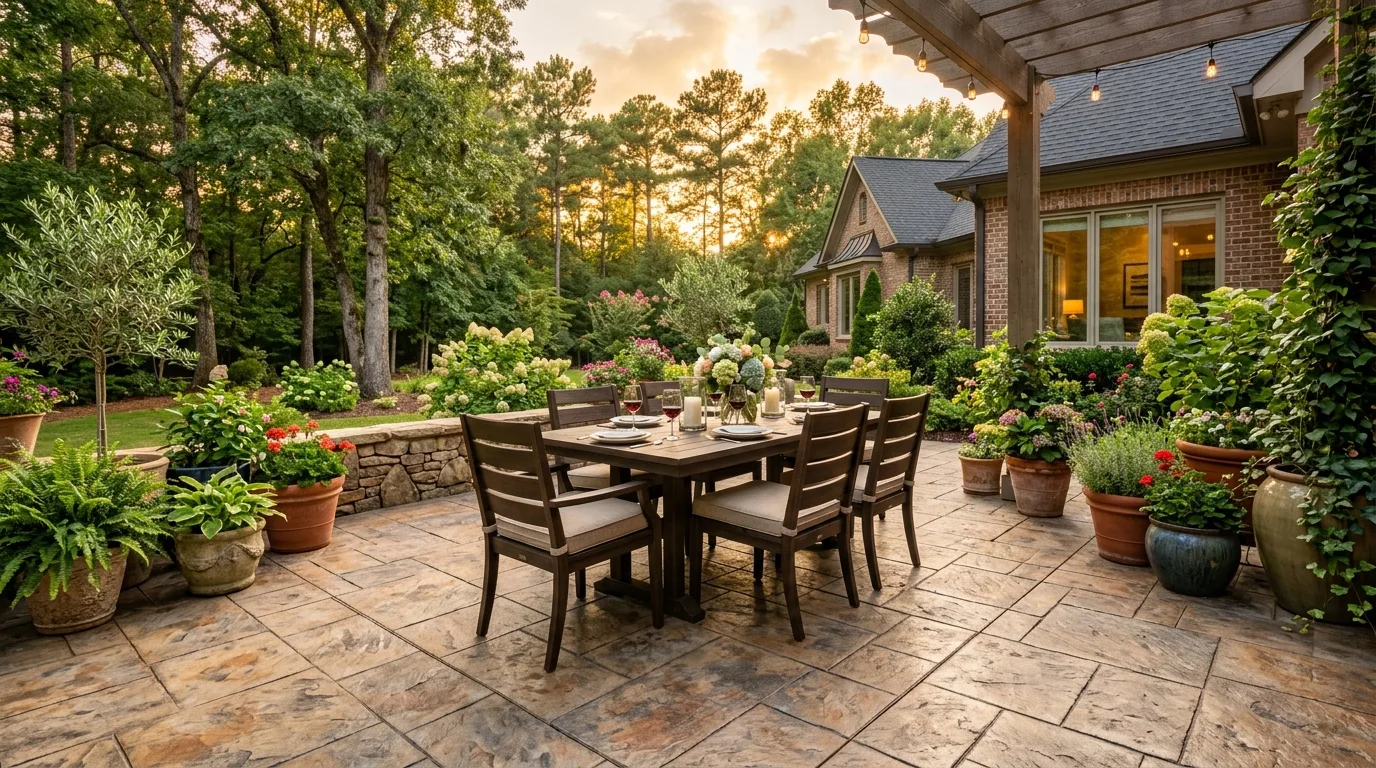
Homeowners considering stamped concrete in Acworth, GA often ask about longevity first — and rightly so, given that stamped concrete costs $10–$18 per square foot. The good news: properly installed and maintained stamped concrete in Georgia lasts 25–40 years structurally. The nuance: “maintained” is the operative word, and Georgia’s specific climate conditions determine what maintenance looks like in practice.
In this post, we cover the expected lifespan of stamped concrete in Georgia, how Acworth’s humid subtropical climate affects it, what the sealer maintenance schedule looks like, and the factors that shorten or extend stamped concrete life here specifically.
Stamped Concrete Built to Last in Acworth
Free estimates with lifetime maintenance guidance — Acworth Concrete Pros. Call (888) 376-0955.
Why Georgia’s Climate Affects Stamped Concrete Differently
Stamped concrete is vulnerable to two primary climate-related forces that Georgia delivers in abundance: UV exposure and freeze-thaw cycling. Understanding how each affects your stamped concrete informs the maintenance decisions that determine whether your patio looks good at year 10 or starts fading at year 5.
UV Exposure: Georgia’s sun is intense year-round — UV radiation levels in Acworth are significantly higher than in northern states, and exposure is nearly year-round given Georgia’s long warm season. UV breaks down the topcoat sealer on stamped concrete faster than it would in a milder climate. An unsealed or poorly sealed stamped concrete surface allows UV to attack the color hardener and cement paste directly, causing fading, chalking, and surface erosion that compromises both appearance and durability. Governors Towne Club and Bentwater homeowners with south-facing patios or driveways see this process most acutely.
Freeze-Thaw Risk: Acworth’s winters are mild by northern standards, but January and February bring freeze events where overnight temperatures drop below 32°F. Water that has infiltrated cracks or penetrated a worn sealer layer expands when it freezes, causing surface delamination — the “spalling” that looks like the surface is peeling or flaking. In stamped concrete, spalling destroys the pattern impression and is not repairable through spot treatment.
Types of Factors That Determine Stamped Concrete Lifespan in Acworth
Installation quality (the primary determinant) The single biggest factor in stamped concrete longevity is what happened during installation. A proper gravel sub-base, correct slab thickness (4 inches minimum), appropriate concrete specification (3,500 PSI minimum for decorative work), and skilled stamping with appropriate timing determines whether the structural slab beneath the pattern lasts 25+ years or begins developing issues within a decade.
Sealer type and application Two sealer categories serve stamped concrete: penetrating sealers (silane/siloxane) that absorb into the concrete and film-forming sealers (acrylic and polyurethane) that form a protective surface layer. For Acworth’s combination of UV intensity and freeze risk, a high-quality acrylic or polyurethane film-forming sealer provides the best color protection and surface waterproofing. Penetrating sealers are better at chloride protection but don’t protect color.
Sealer reapplication frequency Georgia’s UV intensity and temperature cycling degrades film-forming sealers faster than national guidelines suggest. The standard recommendation is resealing every 2–4 years — in Acworth, south-facing or fully sun-exposed stamped surfaces should be resealed every 2 years. North-facing or shaded surfaces may extend to 4 years. The test: pour water on the surface; if it doesn’t bead, the sealer has failed and reapplication is needed.
Sub-base maintenance The clay-soil environment of Cobb County means drainage around stamped concrete surfaces must be maintained over time. If grading shifts, downspouts redirect, or landscaping changes cause water to pool beside or under the slab, the sub-base movement this creates will affect the slab. Annual drainage inspection around stamped concrete is part of the long-term maintenance protocol.
Practical Uses: Lifespan Expectations for Different Applications
-
Stamped concrete patio (400–600 sq ft, residential): 25–40 years structurally with proper installation. Color and surface appearance maintained for 20–30 years with regular resealing on the 2–4 year schedule appropriate for Acworth’s climate. First reseal needed at 18–24 months after installation.
-
Stamped concrete driveway: Slightly shorter color retention than patios because of tire traffic abrasion on the sealer layer — plan to reseal every 2 years for driveways under heavy vehicle use. Structural lifespan comparable to patios: 25–40 years with proper clay-soil subgrade preparation.
-
Stamped concrete pool deck: Pool decks face additional chemical exposure from pool water splash and splash-back. Chlorine and pool chemicals can accelerate sealer breakdown. Reseal annually for pool deck stamped concrete in Acworth — the additional sealer cost is far less than premature resurfacing.
-
Stamped concrete in shaded areas: North-facing patios and areas shaded by Acworth’s mature tree canopy (common in Historic Downtown Acworth and Camden Pointe neighborhoods) experience less UV exposure and therefore slower sealer degradation. Extend resealing intervals toward 3–4 years for these applications.
How It Works: The 25-Year Maintenance Timeline for Acworth Stamped Concrete
Year 1: Installation. Allow 28-day cure before heavy use. Apply initial sealer at 28 days if not applied by contractor.
Year 2: First reseal inspection. If water doesn’t bead readily, reseal. This is the most critical resealing window — early sealer maintenance sets up the long-term protection cycle.
Years 4–10: Reseal every 2–4 years depending on sun exposure and visible sealer condition. Monitor for any surface cracking and address immediately to prevent water infiltration.
Years 10–20: Continue resealing schedule. Monitor sub-base drainage around the perimeter. If any cracking has developed, have it evaluated to determine whether it is surface-only or structural.
Years 20–30: By this point, well-maintained stamped concrete in Acworth shows gradual natural patina. Pattern impression remains clear; color may have shifted slightly from the original. A light surface cleaning and fresh sealer application refreshes the appearance. Structural integrity remains excellent with proper installation.
Stamped Concrete That Lasts in Acworth's Climate
Expert installation and maintenance guidance — free estimates for Cobb County homeowners. Call (888) 376-0955.
Cost Factors: Sealing vs. Resurfacing vs. Replacement
Annual sealer cost: A 5-gallon pail of commercial-grade acrylic sealer covers 1,500–2,000 sq ft. A 400 sq ft patio costs approximately $50–$100 in materials for a DIY reseal, or $200–$400 for professional resealing (every 2–4 years).
Resurfacing cost: If sealer maintenance was deferred and surface spalling has begun, resurfacing with a thin overlay can restore appearance. Cost: $3–$7 per square foot. A 400 sq ft patio costs $1,200–$2,800. Color matching is imperfect — the overlay will appear slightly different from the original.
Replacement cost: Full stamped concrete replacement costs $10–$18 per square foot — a 400 sq ft patio costs $4,000–$7,200. Proper installation this time around, with correct clay-soil sub-base preparation and high-quality sealer applied before the first winter, sets up the next 25–40 year service cycle.
The math is clear: regular resealing at $200–$400 every 2–4 years — totaling $2,000–$5,000 over 25 years — is significantly less expensive than resurfacing or replacement caused by neglected sealer maintenance.
Frequently Asked Questions
How can I tell if my Acworth stamped concrete needs resealing?
The water bead test: splash water on the surface in a sunny area. If it beads and rolls off, the sealer is active. If it absorbs into the surface within 30 seconds, the sealer has failed and reapplication is needed. Also look for: surface chalking or loss of sheen, visible pattern dulling, or color fading from UV exposure. These are all signs that the sealer layer has degraded.
Can I reseal stamped concrete myself?
Yes — DIY resealing is feasible for homeowners who follow the preparation steps correctly. The surface must be completely clean and dry, old sealer must not be peeling or bubbling (which requires professional stripping first), and temperature must be between 50–90°F during application. For complex pattern surfaces with multiple colors, professional resealing is more likely to produce uniform results.
Does new stamped concrete need to be sealed right away?
Yes — apply sealer after the 28-day cure period. Some contractors apply a curing/sealing compound immediately after finishing, which serves both the curing protection and the sealing function. If your contractor applies a curing compound at installation, ask them specifically what product was used and whether it functions as a long-term sealer or just a curing aid, so you know when the first reseal should occur.
Stamped Concrete Experts in Acworth and Cobb County
Serving Acworth, Kennesaw, Woodstock, Marietta, Cartersville — free estimates and lifetime maintenance guidance.
Related: