
Maintaining Your Acworth Concrete: Seasonal Tips for Longevity
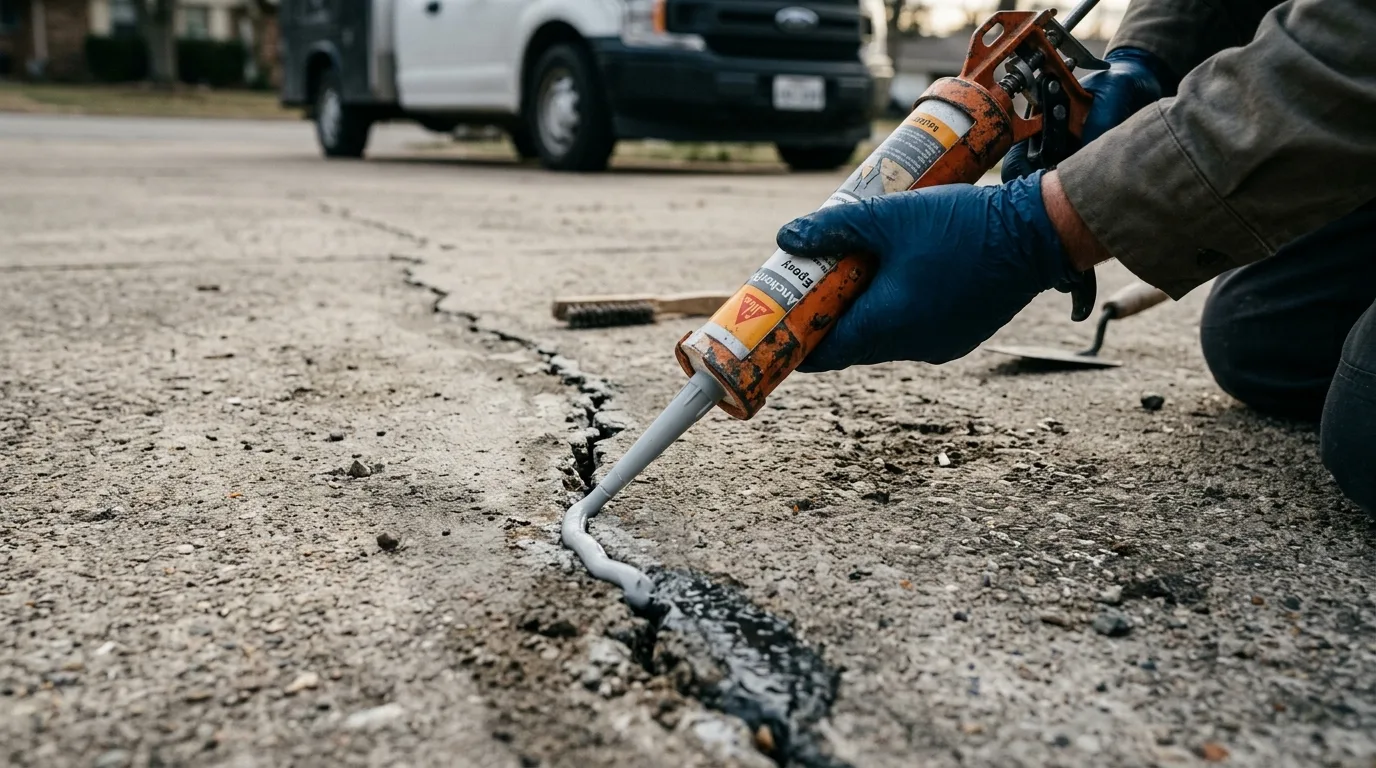
Concrete maintenance isn’t glamorous, but it’s the difference between a driveway that looks great at year 30 and one that needs replacement at year 15. Acworth homeowners face specific seasonal challenges — the spring rains that saturate Cobb County’s red clay, the summer heat that accelerates sealer degradation, and the freeze events of January and February that exploit any water-infiltrated crack. A simple seasonal routine addresses all of these risks with minimal effort and expense.
In this post, we provide a month-by-month maintenance checklist for Acworth concrete, what to look for during each seasonal inspection, and when DIY maintenance is appropriate vs. when to call a professional.
Concrete Repair and Maintenance in Acworth
When maintenance becomes a repair job, Acworth Concrete Pros is ready — free assessments, same-day response. Call (888) 376-0955.
Why Seasonal Maintenance Matters More in Acworth
Acworth’s humid subtropical climate creates specific annual cycles that stress concrete in predictable ways. March is the wettest month, with over 5 inches of average precipitation — the red clay beneath driveways and patios saturates and expands. June through August brings heat and humidity that accelerates sealer degradation and can widen existing cracks as concrete experiences thermal expansion. January and February bring freeze risk — any water that has infiltrated cracks during the wet season can freeze and expand, causing surface spalling.
The homeowner who understands these cycles and takes targeted action at the right seasonal moments extends concrete service life significantly. The homeowner who waits until visible damage appears is already addressing a more expensive problem than the maintenance that would have prevented it.
Types of Seasonal Maintenance Tasks for Acworth Concrete
Spring Maintenance (March–April) Spring is the most important inspection season for Acworth concrete. After winter freeze events and the wet winter/early spring period, new damage often becomes visible for the first time.
- Crack inspection: Walk every concrete surface and document any new or widening cracks. Use a quarter to gauge crack width — cracks wider than the quarter’s thickness warrant professional assessment.
- Joint inspection: Check expansion joints for deterioration. Crumbled or missing joint material should be resealed before the spring rain season drives water into the open joint channel.
- Drainage check: After a spring rain, observe where water flows around your driveways and patios. Pooling water adjacent to slab edges indicates a drainage issue that needs correction before another wet season.
- Sealer bead test: Splash water on concrete surfaces in full sun. If water absorbs rather than beading within 30 seconds, schedule resealing before summer UV degrades the unprotected surface further.
Summer Maintenance (May–August) Summer’s primary concrete concern in Acworth is sealer degradation from UV intensity and any damage from the occasional high-heat pours that poorly timed or managed projects left behind.
- Sealer inspection: Repeat the water bead test. If resealing was not done in spring and the test fails, reseal before peak summer UV has additional months to degrade unprotected concrete.
- Stain treatment: Summer entertaining on concrete patios creates grease, food, and beverage stains. Treat with appropriate concrete-safe degreasers promptly — stains that cure into unprotected concrete are harder to remove.
- Tree root monitoring: Summer root growth is most active in Cobb County. If you have trees within 10 feet of concrete walkways or patios, check for any surface lifting or cracking at the perimeter adjacent to tree root zones.
Fall Maintenance (September–November) Fall is the second optimal season for concrete maintenance in Acworth — good temperature windows for sealing, crack repair, and any repair projects that were deferred from summer.
- Pre-winter sealing: If the spring bead test failed but resealing was deferred, fall is the last good window before winter freeze risk. Seal before November when temperatures begin to approach the 50°F threshold for sealer application.
- Crack repair: Any cracks documented during spring inspection that have been monitored through summer should be repaired in fall before freeze-thaw cycling opens them further. This is the optimal timing for concrete repair in Acworth — moderate temperatures allow repair materials to cure properly.
- Downspout check: Ensure downspouts direct water at least 4–6 feet away from concrete surfaces. Downspouts that discharge directly onto or beside driveways and patios are a leading cause of accelerated clay soil movement beneath slabs in Cobb County.
Winter Maintenance (December–February) Winter concrete maintenance in Acworth is primarily about protection from the freeze events that January and February occasionally deliver.
- No salt policy: Confirm that no rock salt or chloride-based ice melt products are used on any concrete surfaces. Use sand for traction on icy surfaces.
- Post-freeze inspection: After any freeze event where temperatures dropped below 28°F, inspect concrete surfaces for new spalling or surface scaling — these are signs that water infiltrated the concrete and expanded during freezing.
- Deferred repair monitoring: Cracks that were documented but not repaired in fall will be visible after winter — monitor whether they have widened, which confirms ongoing clay soil movement that warrants professional assessment.
Practical Uses: The Annual Concrete Maintenance Calendar for Acworth
-
March: Post-winter inspection — crack documentation, joint condition, sealer bead test, drainage observation after a rain event. Identify any damage from winter freeze events.
-
April–May: Spring sealing window — if bead test failed, reseal. Crack repair for documented cracks. Any repair projects should be initiated in spring for optimal curing conditions.
-
June–August: Minimal active maintenance — stain treatment as needed, monitor for tree root effects on walkways and patios. Avoid major concrete work in peak summer heat unless necessary.
-
September–October: Fall inspection and pre-winter preparation — reseal if spring sealing was deferred, repair documented cracks, verify downspout discharge distances, check joint conditions.
-
November: Last sealing window — temperatures above 50°F required for sealer application; don’t wait past mid-November in Acworth. Prepare for winter by confirming sand supply for traction management.
-
December–February: Protection and monitoring — no salt, post-freeze inspections, document any new damage for spring repair.
How It Works: DIY vs. Professional Maintenance
Most seasonal maintenance tasks in Acworth are DIY-appropriate:
- Water bead testing
- Stain treatment with appropriate cleaners
- Crack documentation and monitoring
- Downspout positioning
- Purchasing and applying commercial-grade sealer to a clean, dry surface
Professional assessment and repair is warranted for:
- Cracks wider than 1/4 inch or visibly growing
- Differential settling between adjacent slab panels
- Surface spalling or delamination affecting more than a small localized area
- Any damage that appears after a freeze event involving penetration of the full slab depth
- Joint deterioration that requires cutting and replacement rather than simple refill
When Maintenance Becomes Repair — We're Ready
Free assessments for Acworth homeowners — Acworth Concrete Pros serves all of Cobb County. Call (888) 376-0955.
Cost Factors: What Preventive Maintenance Saves in Acworth
Annual sealer cost (DIY): $50–$100 in materials for a typical two-car driveway, $150–$250 for professional sealing. Applied every 2–4 years: $200–$600 over 10 years.
Crack fill (professional, per incident): $150–$400 for typical residential crack filling. Addressed promptly when cracks are small, this cost stays low. Deferred until cracks widen and undermine the sub-base, the same repair becomes $1,800–$4,200 in resurfacing.
Full driveway replacement (eventual without maintenance): $2,400–$10,800 for a 600 sq ft driveway, depending on finish choice. A concrete driveway that receives proper seasonal maintenance extends its service life from 15 years (no maintenance) to 30–50 years (proper maintenance) — a $4,000 first replacement deferred by 15–20 years is the clearest illustration of maintenance ROI.
Frequently Asked Questions
How often should I seal my concrete driveway in Acworth?
Every 3–5 years for standard broom-finish concrete. Every 2–4 years for stamped concrete (which has more surface area in the pattern channels that can collect water). Every 2 years for stamped surfaces with south-facing or full-sun exposure. The water bead test — performed in direct sun — is more reliable than a fixed calendar schedule, because actual sealer degradation depends on UV exposure and traffic.
Can I apply sealer over existing peeling sealer on my Acworth driveway?
No — peeling or bubbling sealer must be stripped before new sealer is applied. Applying fresh sealer over a degraded surface traps the failing layer and produces adhesion failure in the new coat within 1–2 years. A professional can strip the old sealer with chemical stripper or mechanical abrasion, prepare the surface properly, and apply new sealer that will bond correctly.
Is there anything I can do to prevent clay soil movement under my Acworth concrete?
Maintaining consistent soil moisture around the concrete perimeter is the most effective approach. Ensure downspouts direct water away from concrete edges. During summer drought, a perimeter drip irrigation system (not directly on the concrete) can slow the clay shrinkage that creates sub-base voids. Grade the landscape so water drains away from concrete rather than pooling beside it.
Acworth Concrete Maintenance and Repair — Year-Round
Serving Acworth, Kennesaw, Woodstock, Marietta, and all of Cobb County. Free assessments, same-day response.
Related: